 Reviews

 Proudly American
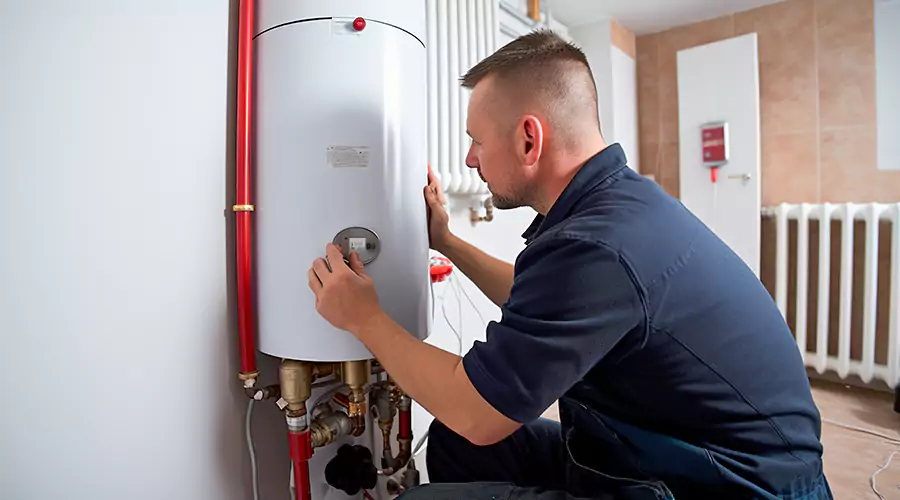
Many homeowners use the terms boiler and water heater as if they mean the same thing, but they serve different purposes. Both heat water, yet they do it in different ways and for different jobs. If you are planning a replacement, troubleshooting a problem, or buying a home, knowing the difference helps you make the right decision and avoid costly mistakes.
This guide explains how a boiler vs. water heater compares, what each system does, and which one makes sense for your home.
What Is a Boiler?
A boiler is a heating appliance that warms water (or sometimes produces steam) and sends that heat through your home’s heating system.
What a boiler is used for?
A boiler is primarily used for space heating, meaning it heats your home, not just your shower water. It typically connects to one of these systems:
- Radiators
- Baseboard heaters
- Radiant floor heating
- Hydronic air handlers (less common, but possible)
The boiler heats water and a pump circulates it through pipes to distribute heat. After the water releases heat into your rooms, it returns to the boiler to be reheated.
Can a boiler provide hot water too?
Yes, some boilers also provide domestic hot water, but it depends on the setup. Many homes with boilers use either:
- An indirect water heater (tank heated by the boiler)
- A combination boiler (one unit provides heat and hot water)
What Is a Water Heater?
A water heater is designed primarily to supply domestic hot water for daily use.
What a water heater is used for?
Water heaters provide hot water for:
- Showers and baths
- Sinks and dishwashing
- Laundry
- General household hot water needs
Water heaters are usually one of these types:
- Storage tank water heater (keeps hot water in a tank)
- Tankless water heater (heats water on demand)
- Heat pump water heater (uses electricity efficiently to transfer heat)
Most standard water heaters do not heat your home. Their job is hot water for fixtures and appliances.
Boiler vs. Water Heater: The Main Differences
1) Purpose
- Boiler: Heats the home (space heating), and sometimes also provides hot water
- Water heater: Provides hot water for sinks, showers, and appliances
2) How heat is delivered
- Boiler: Sends heated water through radiators, baseboards, or radiant floors
- Water heater: Sends hot water to faucets and appliances through plumbing lines
3) Temperature range and operation
Boilers often run at higher temperatures for heating needs, especially in colder climates.
Water heaters are typically set to lower temperatures focused on safe household use.
4) System components
A boiler system usually includes:
- Circulator pump
- Expansion tank
- Pressure relief valve
- Zones and thermostats
- Radiators or baseboards
A water heater system often includes:
- Tank or heat exchanger
- Temperature and pressure relief valve
- Cold water inlet and hot water outlet
- Venting (for gas models)
5) Installation and cost
- Boilers are usually more complex to install and service.
- Water heaters are simpler, especially standard tank units.
Pros and Cons
Boiler Pros
- Comfortable, even heat (especially with radiant floors)
- Often quieter than forced air systems
- Can be highly efficient, especially modern condensing boilers
- Works well in cold climates and larger homes
Boiler Cons
- Higher upfront cost
- More components to maintain
- Repairs can be more specialized
Water Heater Pros
- Simple and widely available
- Lower upfront cost for standard tanks
- Easy to replace in many homes
- Tankless models can be efficient and save space
Water Heater Cons
- Standard tanks can run out of hot water
- Tank models lose some heat while waiting (standby loss)
- Tankless units may require upgrades to gas line or electrical service
Different Setups You Might Have at Home
Setup 1: Furnace plus water heater
This is common. A furnace heats the home, and a separate water heater handles hot water.
Setup 2: Boiler plus separate water heater
Also common. The boiler heats the home, and a dedicated water heater supplies domestic hot water.
Setup 3: Boiler plus indirect water heater
Here, the boiler heats both the home and the water in an indirect tank. This can be efficient because the boiler does the heavy lifting, and the indirect tank stores hot water.
Setup 4: Combination boiler
A combi boiler handles home heating and domestic hot water without a large storage tank. It can be a great space saver, but capacity depends on flow rate and household demand.
How to Choose: Boiler or Water Heater?
You do not always choose between them, because many homes need both. The real question is usually which system fits your home’s needs and existing setup.
Choose or keep a boiler if
- Your home uses radiators, baseboards, or radiant floor heating
- You want steady, comfortable heat
- You live in a colder climate where hydronic heating performs well
- You are considering an indirect tank for strong hot water performance
Choose or keep a water heater if
- You already have a separate heating system (furnace or heat pump)
- You primarily need domestic hot water
- You want a straightforward replacement with minimal changes
- You want tankless hot water for space savings and continuous supply
Key sizing factors
- Household size and hot water usage
- Number of bathrooms
- Fuel type and availability (gas or electric)
- Space and venting options
- Local water hardness (impacts maintenance)
FAQ
Can a water heater heat a house?
Not typically. Standard water heaters are not designed for full home heating. Some specialized systems exist, but most homes use a furnace or boiler for space heating.
Can a boiler replace a water heater?
A boiler can supply domestic hot water only if it is paired with an indirect tank or designed as a combination boiler. A heating only boiler does not automatically replace your water heater.
Which is more efficient?
Efficiency depends on the model and how it is used. Modern condensing boilers and high efficiency water heaters can both perform very well when sized correctly and maintained.
Final Takeaway
A boiler is mainly for heating your home using hot water circulated through radiators, baseboards, or radiant floors. A water heater is mainly for household hot water at sinks, showers, and appliances. Some systems overlap through indirect tanks or combination boilers, but their core roles are different. If you know what your home already has and what you need most, choosing the right setup becomes much easier.